On November 3, voters in 38 communities across ten states decided 41 local measures on data centers. In 40 of those 41 local ballot measures, the side limiting data center development won, according to unofficial results compiled by Ballotpedia. The one exception was Harwood, North Dakota, where voters rejected an extra review requirement for industrial projects by 325 votes to 105. Even there, the measure would not have touched the data center campus already approved in the area, as Route Fifty reported.
The margins matter as much as the count. By our tally of Ballotpedia’s figures, about 73 percent of the roughly 249,000 votes cast on these measures went to the side limiting data centers. In the median measure, the side limiting data centers took 77 percent, and 30 of the 41 cleared 70 percent. The closest contests, Sprigg Township (53 percent) and Grove City (55 percent), were both in Ohio, and both still went against development. This was not a narrow result in a handful of places. It was a consistent one across small towns, suburbs and counties, and across very different kinds of questions.
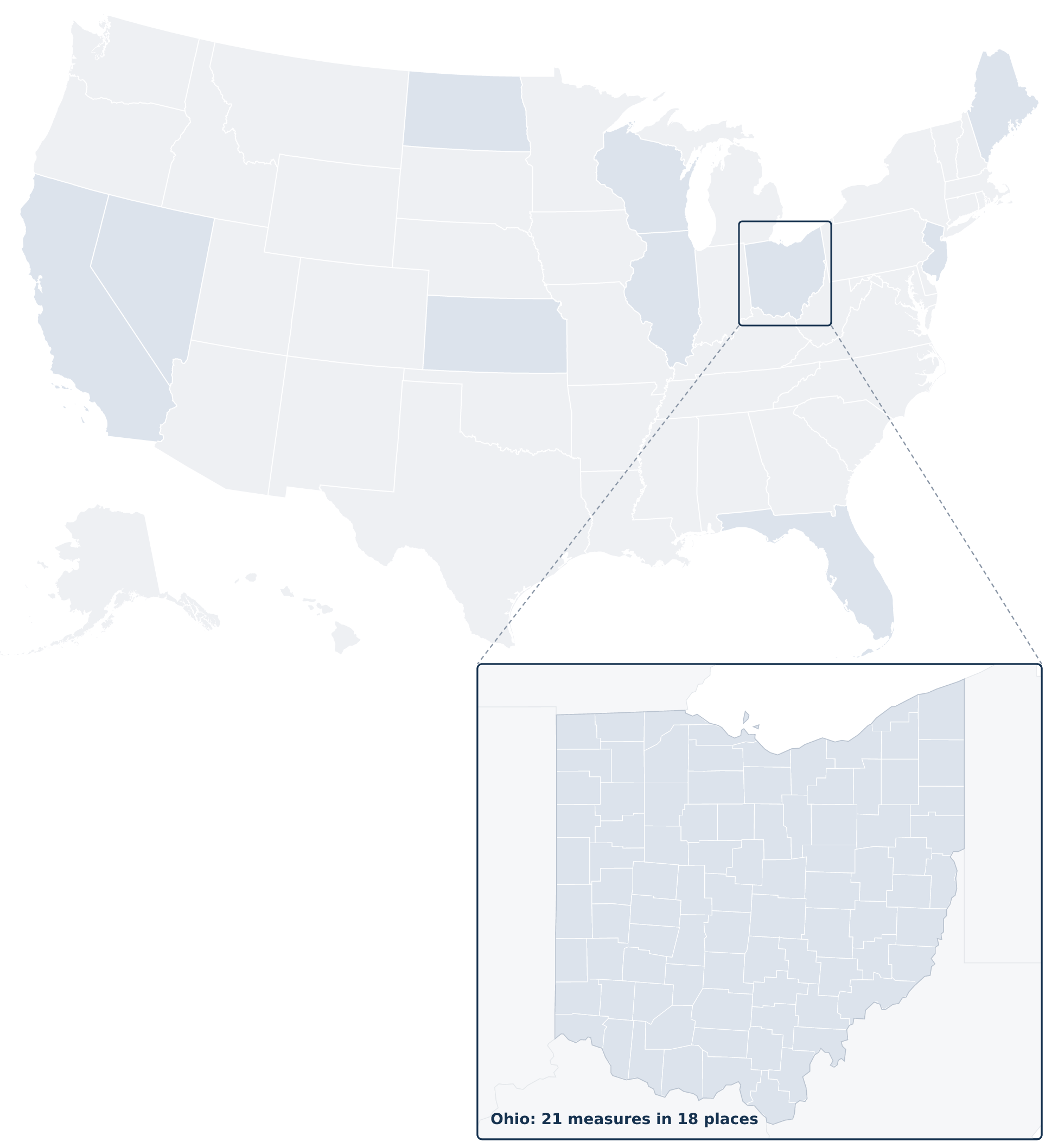
Figure 1. Where the 41 measures were on the ballot
Hover over a dot to see the place, the measure and the result. Ohio, with 21 measures in 18 places, is pulled out below the national map.
Side limiting data centers won Side favoring development won A number shows several measures in one spot.
 424
Source: Ballotpedia, unofficial results as of November 4, 2026. Map: Branchlet Group.
What voters were actually asked
Reading the ballots one by one, most of these measures were not simple yes-or-no votes on a single project. They fall into a few families:
- Bans. Alhambra, California (82 percent), Edgewater, Florida (77 percent) and Granville, Ohio (82 percent) voted to prohibit data centers outright.
- Size thresholds. Many measures, including Conneaut, Defiance, Oregon and Sunbury in Ohio and Ottawa in Kansas, prohibited facilities above a power threshold, most often 25 megawatts.
- Moratoriums. Wells, Peru and Wiscasset in Maine adopted temporary moratoriums of 180 days or six months.
- Process rules. Grove City, Ohio now requires a public vote on developments of at least 50 acres, more than 20 megawatts or more than 500,000 gallons of water a day. Janesville, Wisconsin requires one for the former GM/JATCO site if total costs exceed $450 million.
- Fiscal conditions. Perry, Ohio voters (87 percent) required hyperscale developers seeking special tax incentives to post financial guarantees to the community.
- Specific deals. Ashville, Ohio voted down the village’s term sheet with EdgeConneX (82 percent against), and Wilmington, Ohio rejected four rezonings to light industrial by about 80 to 20 each.
- Advisory votes. Seven Illinois questions, from Joliet to Morgan County, were advisory, and every one went against data centers.
Two features stand out. First, the questions that put conditions on development, such as Perry’s financial guarantees or Grove City’s thresholds, passed as easily as the bans. Voters were asking about the terms of the deal, not only whether to have one. Second, the issue reached well beyond the towns voting on it: NBC exit polls, as reported by Route Fifty, found that 56 percent of voters nationally called AI and data centers a crucial or major factor in their vote.
Maryland did not vote on Tuesday, but it is having the same argument
None of Tuesday’s 41 measures was in Maryland. That is not because the issue is quiet here.
- Prince George’s County. The County Council paused data center approvals in September 2025 and, in July 2026, extended its pause for two years. The county’s own task force found that data centers can generate tax revenue but create relatively few permanent jobs once construction ends, and flagged pressure on the regional grid and on electricity rates. More than 23,000 residents signed a petition against a proposed campus at the former Landover Mall site, according to Nature Forward.
- Frederick County. Residents gathered more than 21,000 signatures for a referendum on the county’s 2,600-acre data center overlay zone near Adamstown, but on June 30 the Supreme Court of Maryland ruled it could not go on the ballot. The County Executive then froze new data center applications pending the state’s cost-benefit study. In September she rejected a developer’s offer of $110 million in community benefits in exchange for eight years of protection from zoning changes, and extended the moratorium to July 1, 2027.
- Montgomery County. In July 2026, council committees recommended an 18-month pause and defined a large data center as one with at least 25 megawatts of demand.
- The state. The Utility RELIEF Act, signed in May 2026, requires a broader set of data centers to pay a special tariff for the grid costs they impose. A 2026 bill to repeal the state’s 2020 sales and use tax exemption for data center equipment failed. The legislature’s own fiscal note found that neither the Department of Commerce nor the Comptroller has data on what that exemption is worth. Governor Moore’s September 23 executive order set principles that start with data centers paying their own way.
The Frederick case carries the main lesson for Maryland. In much of the state, the ballot box is not the forum where these decisions get made. They are made by councils, county executives, the Public Service Commission and negotiated agreements such as the one Frederick turned down. That puts more weight, not less, on the quality of the evidence those decision makers have in front of them.
What an independent fiscal review should answer
One reading of Tuesday’s results is that many communities no longer take the promised benefits on trust. A credible review does not start from the developer’s headline figures or from national averages. It answers a short list of local questions:
- Net fiscal position. Projected property and income tax receipts set against the cost of roads, water, emergency services and schools, year by year, after any local assessment reduction.
- The price of the incentive. What the state sales tax exemption and any local abatement are worth over the life of the project, and whether the investment would have come without them.
- Jobs per dollar. Construction jobs versus permanent jobs, how many go to county residents, and the public cost per permanent job.
- Ratepayer incidence. Who pays for new transmission and capacity under the new tariff, and how much could reach household bills.
- Water and land. Peak water draw and the next-best use of the land.
- Local multipliers. National-average multipliers overstate the spillovers a single county keeps. Regionalized multipliers give a more honest local estimate.
These questions also price the trade-offs that are actually on the table. What is $110 million in community benefits worth against eight years of zoning certainty? How large should a financial guarantee be? A fiscal review can put a number on each.
Where we come in
Branchlet Group builds jurisdiction-specific social accounting models and fiscal impact analyses, including models for Baltimore City and Montgomery County, and we are applying the same tools to a large data center campus in Richland Parish, Louisiana. We do not take a side on whether any county should approve a data center. Our aim is that the costs, the benefits and the incentives are on the table, in local terms, before the decision is made.
If your county is weighing a data center proposal and wants an independent read of the numbers, we would be glad to talk. Write to us at team@branchletgroup.com.
Table 1. Local data center ballot measures, November 3, 2026
| Place | State | What a yes vote would do | Outcome | Yes / No (%) | Side that won |
|---|---|---|---|---|---|
| Ashville | OH | Referendum on village deal with EdgeConneX | Defeated | 18 / 82 | Limits |
| Conneaut | OH | Issue 10: ban data centers over 25 MW | Approved | 65 / 35 | Limits |
| Defiance | OH | Ban data centers over 25 MW | Approved | 65 / 35 | Limits |
| Granville | OH | Ban data center construction | Approved | 82 / 18 | Limits |
| Grove City | OH | Issue 28: voter approval for large developments | Approved | 55 / 45 | Limits |
| Hubbard | OH | Ban data centers in city limits | Approved | 77 / 23 | Limits |
| Monroe Twp. | OH | Township zoning initiative | Approved | 60 / 40 | Limits |
| Monroeville | OH | Advisory: allow data centers | Defeated | 12 / 88 | Limits |
| Oregon | OH | Issue 25: ban data centers over 25 MW | Approved | 61 / 39 | Limits |
| Pataskala | OH | Ban large-scale data centers | Approved | 74 / 26 | Limits |
| Perry | OH | Issue 16: financial guarantees for tax incentives | Approved | 87 / 13 | Limits |
| Piqua | OH | Charter amendment banning a data center | Approved | 67 / 33 | Limits |
| Sprigg Twp. | OH | Township zoning initiative | Approved | 53 / 47 | Limits |
| Sunbury | OH | Ban data centers over 25 MW | Approved | 79 / 21 | Limits |
| Trenton | OH | Issue 17: ban large-scale data centers | Approved | 80 / 20 | Limits |
| Upper Sandusky | OH | Charter amendment banning a data center | Approved | 77 / 23 | Limits |
| Urbana | OH | Ban data centers in city limits | Approved | 77 / 23 | Limits |
| Wilmington | OH | Uphold rezoning, 1957 SR 730 (65 acres) | Defeated | 20 / 80 | Limits |
| Wilmington | OH | Uphold rezoning, McGuinn Rd (191 acres) | Defeated | 20 / 80 | Limits |
| Wilmington | OH | Uphold rezoning, SR 730 (119 acres) | Defeated | 20 / 80 | Limits |
| Wilmington | OH | Uphold rezoning, US 68 South (170 acres) | Defeated | 20 / 80 | Limits |
| Bloomington | IL | Advisory: moratorium on large data centers | Approved | 78 / 22 | Limits |
| Chouteau Twp. | IL | Advisory: permit new data centers | Defeated | 17 / 83 | Limits |
| Granite City Twp. | IL | Advisory: permit new data centers | Defeated | 26 / 74 | Limits |
| Joliet | IL | Advisory: approve AI data centers | Defeated | 21 / 79 | Limits |
| Morgan County | IL | Advisory: restrict data centers | Approved | 88 / 12 | Limits |
| Nameoki Twp. | IL | Advisory: permit new data centers | Defeated | 22 / 78 | Limits |
| Venice Twp. | IL | Advisory: permit new data centers | Defeated | 24 / 76 | Limits |
| Alhambra | CA | Measure DB: ban data centers | Approved | 82 / 18 | Limits |
| Edgewater | FL | Charter amendment banning new data centers | Approved | 77 / 23 | Limits |
| El Dorado | KS | Ban data centers and battery storage | Approved | 71 / 29 | Limits |
| Emporia | KS | Ban high-impact data centers | Approved | 60 / 40 | Limits |
| Ottawa | KS | Question 2: ban data centers over 25 MW | Approved | 72 / 28 | Limits |
| North Berwick | ME | Question 2: ban data centers of 25,000 sq ft+ | Approved | 78 / 22 | Limits |
| Peru | ME | Article 2: 180-day moratorium | Approved | 76 / 24 | Limits |
| Wells | ME | Article 5: 180-day moratorium | Approved | 82 / 18 | Limits |
| Wiscasset | ME | Question 2: six-month moratorium | Approved | 66 / 34 | Limits |
| Boulder City | NV | Question 1: allow data centers in Eldorado Valley | Defeated | 29 / 71 | Limits |
| Downe Twp. | NJ | Advisory: support data centers | Defeated | 13 / 87 | Limits |
| Harwood | ND | Independent review of large industrial projects | Defeated | 24 / 76 | Development |
| Janesville | WI | Voter approval for GM/JATCO site over $450M | Approved | 63 / 37 | Limits |
Hover over a row for the county and vote counts.
Notes: Results are unofficial. Percentages are rounded from Ballotpedia’s vote counts. “Side that won” shows whether the result limited data center development or allowed it. Illinois and New Jersey questions, and Monroeville, Ohio, were advisory. Wilmington, Ohio held four separate rezoning referendums (65, 191, 119 and 170 acres). Across all 41 measures, about 181,000 of 249,000 votes (73 percent) went to the side limiting data centers.
Source: Ballotpedia, “Data center-related ballot measures, 2026”, read November 5, 2026; cross-checked against Duane Morris Government Strategies, “Data Centers on the Ballot: Where Things Stand,” November 4, 2026.
Sources
- Ballotpedia, “Data center-related ballot measures, 2026.” https://ballotpedia.org/Data_center-related_ballot_measures,_2026
- Ballotpedia News, “Voters in ten states will vote on data center-related ballot measures November 3,” Nov. 3, 2026. https://news.ballotpedia.org/2026/11/03/voters-in-ten-states-will-vote-on-data-center-related-ballot-measures-november-3/
- Duane Morris Government Strategies, “Data Centers on the Ballot: Where Things Stand,” Nov. 4, 2026. https://statecapitallobbyist.com/artificial-intelligence-ai/data-centers/data-centers-on-the-ballot-where-things-stand/
- Route Fifty, “Voters reject data centers in local ballot initiatives,” Nov. 4, 2026. https://www.route-fifty.com/artificial-intelligence/2026/11/voters-reject-data-centers-local-ballot-initiatives/417033/
- Fast Company, “AI data centers also lost big in the 2026 midterm elections,” Nov. 4, 2026. https://www.fastcompany.com/91635527/midterm-elections-2026-ai-data-centers-lost-big-list-state-ballots
- Conduit Street (MACo), “Prince George’s Pauses Data Center Approvals Amid Policy Review,” Sept. 24, 2025. https://conduitstreet.mdcounties.org/2025/09/24/prince-georges-pauses-data-center-approvals-amid-policy-review/
- FOX 5 DC, “Prince George’s County leaders weigh data center future after long-awaited report,” Jan. 27, 2026. https://www.fox5dc.com/news/prince-georges-county-leaders-weigh-data-center-future-after-long-awaited-report
- WTOP, “Possible 18-month pause on data centers considered in Montgomery County,” July 2026. https://wtop.com/montgomery-county/2026/07/possible-18-month-pause-on-data-centers-considered-in-montgomery-county/
- Nature Forward, “Brightseat Tech Park” (Maryland Data Center Series), July 30, 2026. https://natureforward.org/brightseat-tech-park/
- WYPR, “Maryland Supreme Court shuts down Frederick County data center referendum,” June 30, 2026. https://www.wypr.org/wypr-news/2026-06-30/maryland-supreme-court-shuts-down-frederick-county-data-center-referendum
- WYPR, “Frederick County will limit new data center development,” July 2, 2026. https://www.wypr.org/wypr-news/2026-07-02/frederick-county-will-limit-new-data-center-development
- WYPR, “Frederick County rejects agreement with data center developer amidst public outcry,” Sept. 15, 2026. https://www.wypr.org/wypr-news/2026-09-15/frederick-county-rejects-agreement-with-data-center-developer-amidst-public-outcry
- Maryland Matters, “Moore signs Maryland energy bill aimed at cutting power costs,” May 12, 2026. https://marylandmatters.org/2026/05/12/moore-signs-utility-relief-act/
- Maryland Matters via Patch, “Battles over data centers intensify in State House, communities,” Apr. 20, 2026. https://patch.com/maryland/across-md/battles-over-data-centers-intensify-state-house-communities
- Department of Legislative Services, Fiscal and Policy Note, HB 560 (2026). https://mgaleg.maryland.gov/2026RS/fnotes/bil_0000/hb0560.pdf
- Nature Forward, press release on the Governor’s executive order on data centers, Sept. 24, 2026. https://natureforward.org/press-release-md-govs-executive-order-on-data-centers/


Leave a Reply